
For decades, Thought Leadership was considered one of the most important drivers of professional success. Whether someone was building a business, advancing their career, or growing their influence within an industry, the advice remained largely the same: attend events, meet people, exchange contacts, and build relationships over time.
While that advice still holds value, the professional landscape has changed significantly. Today, relationships often begin long before two people meet. Prospective clients research consultants online. Employers review personal brands before interviews. Event organizers evaluate speakers through their published content. Business leaders increasingly form opinions based on what professionals share publicly rather than who they happen to meet in person.
This shift has elevated the importance of thought leadership. In many industries, influence is no longer built solely through proximity. It is built through ideas, insights, and the consistent demonstration of expertise. Understanding how thought leadership creates professional influence is becoming increasingly important for professionals who want to remain relevant in a highly connected world.
Networking Still Matters, But It Is No Longer Enough
Traditional networking was built around access. The people who attended the right conferences, joined the right associations, and cultivated the right relationships often gained access to opportunities that others never saw.
The challenge is that networking has always had natural limitations. It is constrained by geography, time, and personal capacity. Even the most active networker can only attend a certain number of events, meet a finite number of people, and maintain a limited number of professional relationships.
Digital platforms have fundamentally changed this equation.
Today, a leadership coach in London can publish an article that reaches readers across Europe. A business consultant in Mumbai can share insights that attract clients from multiple countries. A speaker can establish credibility with thousands of professionals without ever being physically present in the same room.
The importance of networking has not disappeared. Rather, networking is increasingly being supplemented by visibility. Professionals are discovering that the combination of relationships and thought leadership is often far more powerful than either one alone.
The Shift From Relationship Building to Reputation Building
One of the most significant changes in professional development is the growing role of reputation at scale.
Historically, reputation spread through personal recommendations. Someone referred a colleague. A client recommended a consultant. A manager advocated for an employee. These mechanisms remain important, but technology has expanded the ways in which reputation is formed.
Today, many professionals build credibility through content, speaking engagements, interviews, webinars, podcasts, and industry commentary. Each contribution becomes part of a larger body of work that others can evaluate.
This is where how thought leadership creates professional influence becomes particularly clear.
When professionals consistently share valuable perspectives, they allow others to assess their expertise before a direct conversation ever occurs. Instead of relying solely on introductions, they create opportunities for discovery.
The result is a form of professional influence that scales more effectively than traditional networking alone.
Why Organizations Are Paying More Attention to Thought Leadership
The rise of thought leadership is not limited to entrepreneurs, consultants, or content creators. Organizations themselves are increasingly investing in it.
Many businesses have recognized that trust is becoming a critical competitive advantage. Customers, clients, and stakeholders want to understand the people behind the products and services they purchase. They are often more likely to engage with organizations that demonstrate expertise openly rather than simply promote their offerings.
This is one reason why executive thought leadership has become such a significant focus across industries.
Leaders who share insights on industry trends, organizational challenges, innovation, and professional development often create stronger trust with both internal and external audiences. Their visibility reinforces the credibility of the organizations they represent.
As markets become more competitive, expertise alone is rarely enough. Expertise must also be communicated.
Why Thought Leadership Is Replacing Traditional Networking
The phrase may sound dramatic, but it does not suggest that networking is disappearing.
Instead, it highlights a change in how professional relationships begin.
In the past, networking often came first and credibility followed. People met, exchanged information, and gradually built trust through ongoing interaction.
Increasingly, the process is happening in reverse.
Professionals encounter ideas before they encounter people.
They read articles before scheduling meetings.
They watch presentations before making introductions.
They listen to podcasts before reaching out for conversations.
This is one of the strongest reasons why thought leadership is replacing traditional networking as a primary driver of professional visibility.
Thought leadership allows professionals to establish credibility before the first interaction takes place.
When a conversation finally happens, it often begins from a foundation of familiarity rather than complete anonymity.
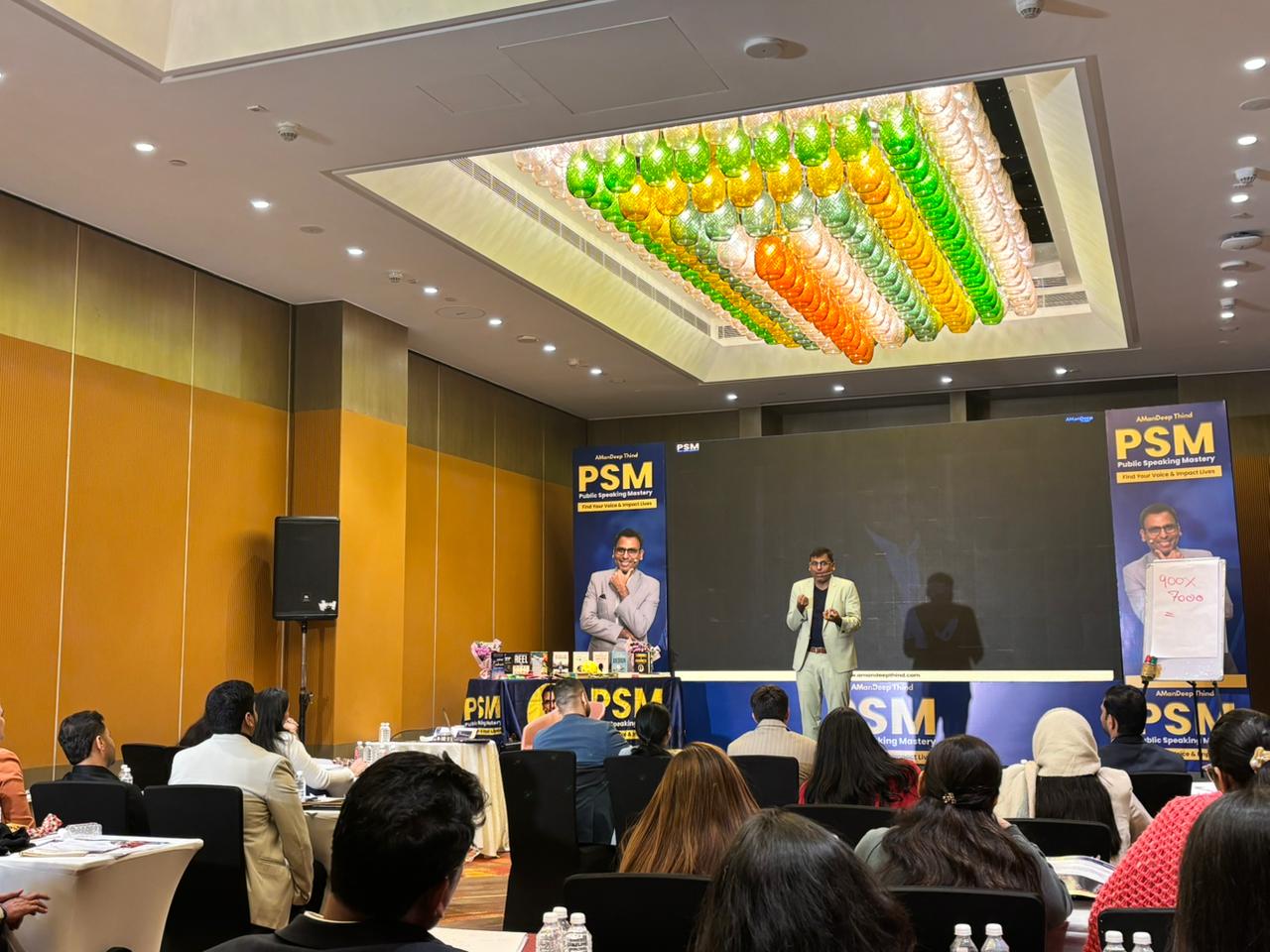
Public Speaking as a Form of Thought Leadership
Public speaking occupies a unique position within this discussion because it sits at the intersection of communication, visibility, and authority.
A well-delivered presentation does more than educate an audience. It demonstrates expertise, perspective, and leadership. In many cases, a keynote speech or workshop can have a lasting impact long after the event itself concludes.
The digital environment has amplified this effect. Presentations are recorded, clips are shared online, and key insights are distributed through multiple channels. A single speaking engagement can generate content that continues creating value for months or even years.
For professionals seeking to strengthen their influence, public speaking remains one of the most effective forms of thought leadership available. It allows expertise to be communicated in a way that is both scalable and highly personal.
The Leadership Takeaway
The future of professional influence is unlikely to be defined by networking or thought leadership alone. The most successful professionals will continue to build relationships while also sharing ideas that demonstrate their expertise.
However, the balance is shifting.
In a world where information travels instantly and visibility increasingly shapes opportunity, professionals can no longer rely exclusively on being present in the right rooms. They must also ensure that their ideas are visible beyond those rooms.
This is ultimately how thought leadership creates professional influence. It transforms expertise into a public asset, extends reputation beyond personal networks, and creates opportunities that traditional networking alone may never uncover.
That shift explains why thought leadership is replacing traditional networking as one of the most powerful drivers of professional growth in today’s business environment.
I hope you enjoyed reading my blog, why not fill out this form and get a guidebook on how you can overcome your fear of stage, completely for free!