
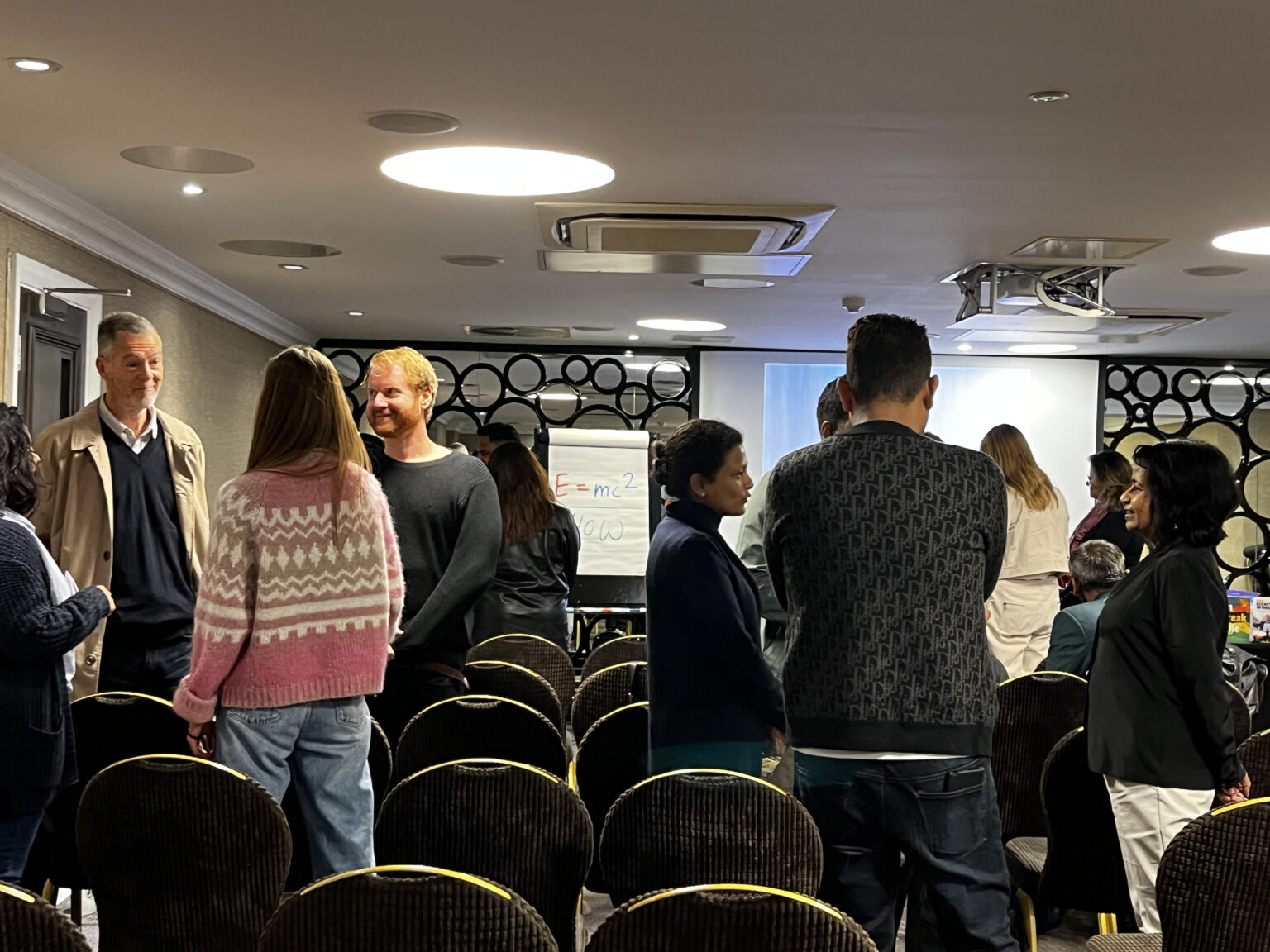
Picture this: You’re in a packed conference room. Someone is speaking to the rest of the room, and their slides are good. The script is good too. But somehow, everything that they’re saying feels empty. There’s no spark there; it’s just a carefully crafted monologue that’s spoken in a monotone voice, as if they’re reciting something that AI generated. I’m sure after a while, you would start feeling bored as well.
If you’ve experienced this, then you know how much more value a human’s voice can add to a conversation. We’re living in an age where using AI may seem like an efficient choice, and why wouldn’t you? It can research, write, and craft a script for you, but therein lies a big issue. AI communication lacks the core human emotion that is needed to tell meaningful stories and to build up a genuine connection.
Below, I’ll explain how you can stop AI communication from hijacking your public speaking sessions and be more human in front of your audience.
1. Tell Real Stories Only You Can Tell
AI can scrape the internet for data and statistics, but it doesn’t know what you’ve done or experienced before on your own. Why rely on AI communication to tell stories for you when you can use your own to engage the audience in a meaningful way?
Instead of relying on an AI-generated story, share something personal to you with your audience. It can be an experience, or maybe even a story about something that might’ve happened to you. I know it can be hard sometimes not to rely on something else, but the genuine stories that you’ll share will leave more of a lasting impact on your audience.
Example: Imagine you’re speaking, and suddenly you start telling a story that was written for you by AI. Someone from your audience could ask you questions about it. How can you possibly answer for a story that you haven’t experienced for yourself? AI communication can prove to be a detriment sometimes as well.
2. Leave Space for Spontaneity
Public speaking thrives on being Present in the moment with your audience. Working with them and reading the atmosphere of the room are key parts of creating a great public speaking session. Sure, you can use an AI-generated script for your session, but it can heavily affect your delivery.
The fact is, AI will create a script for you, but it can’t anticipate the necessary pauses, or a joke that would suit a particular context in the future, it also cannot tell you how you can deliver your speech. Only you, yourself, can do that, being present in the moment with your audience and working with them on creating a healthy environment that invites curiosity, is an essential part of this process.
Example: Let’s say you’re giving a speech on a large stage. AI wrote your script, and you’re just… speaking. There are no pauses, there are no breaks for funny or serious moments, you’re not using your voice to build up to something. It’s just you speaking in a monotone voice, reciting the script. Such an environment will not make your audience resonate with AI communication.
3. Fact-Check Everything
I get it, sometimes using AI is just really efficient, and leaving everything up to it can feel liberating and may even free you up to tend to other tasks. But have you ever fact-checked the information that AI provides you? All those statistics, numbers, and data. Fact-checking is another key aspect of working with AI communication. Delivering incorrect information or a story to your audience, which they can easily refute, can lead to a disastrous speech.
Imagine a person preparing to give a big speech. He steps out onto the stage, grabs a mic, and starts talking, but after a while, he notices a confused look on his audience’s face. Turns out that people are slowly realising that the facts or data that he’s giving out are wrong. This is something that can be easily avoided by fact-checking any information that comes through AI.
4. Prioritize Connection Over Perfection
Sometimes we have a fear of making mistakes or saying something wrong. And sure, having a proper script ready by AI can help you feel a little more confident. But always ask yourself this – “Am I using this script to improve myself, or am I just trying to look better?”
Making mistakes is common; if anything, it makes you sound more human. And your audience will even appreciate it if you own up to those mistakes, but the fact that you’re being real with them, and you’re trying to create a genuine human connection with them, is something that will leave more of an impact.
Example: During a presentation, let’s say you lose your train of thought, and there’s some awkward silence in the room for about 5 seconds. You can break the tension by adding a little humour, saying something like “Sorry people, bear with me – sometimes my slides move faster than my brain”. This comes with practice; the more you speak, the better you’ll get at it.
5. Limit AI to the Background
AI is your assistant, not your replacement. You can use it for some things, maybe you want to generate an idea, or maybe you want to know more about something, using it as a tool for research can yield some good results, but using it to write full scripts for you will make it replace your genuine human emotion with robot-like delivery. AI communication won’t help you much there.
Example: Imagine you’re speaking in public and suddenly someone asks you a question, you’ve researched about it, but you’re not following a full script, so you have room to improvise, you can answer the question and then carry on with your conversation as if nothing even happened.
Conclusion
The bottom line is, none of us wants to sound like robots. We all want to talk to our audience like actual human beings. I understand the alluring nature of AI communication, its efficiency, and the fast replies and answers, which can be quite tempting to use. But the people you’re speaking to are there for you, not for what the AI has to say. So in return, you can provide them with value by giving them a good public speaking session where you’re being real.
Want me to cover something else in regards to public speaking or AI Communication? Tell me about it in the comments below, and follow us on all of our socials to keep up to date with all kinds of public speaking tips, tricks, and hacks!
Want to learn more on how you can conquer your fear of stage? Sign up for our guidebook that will help you not only get over the fear of stage, but also conquer it!