
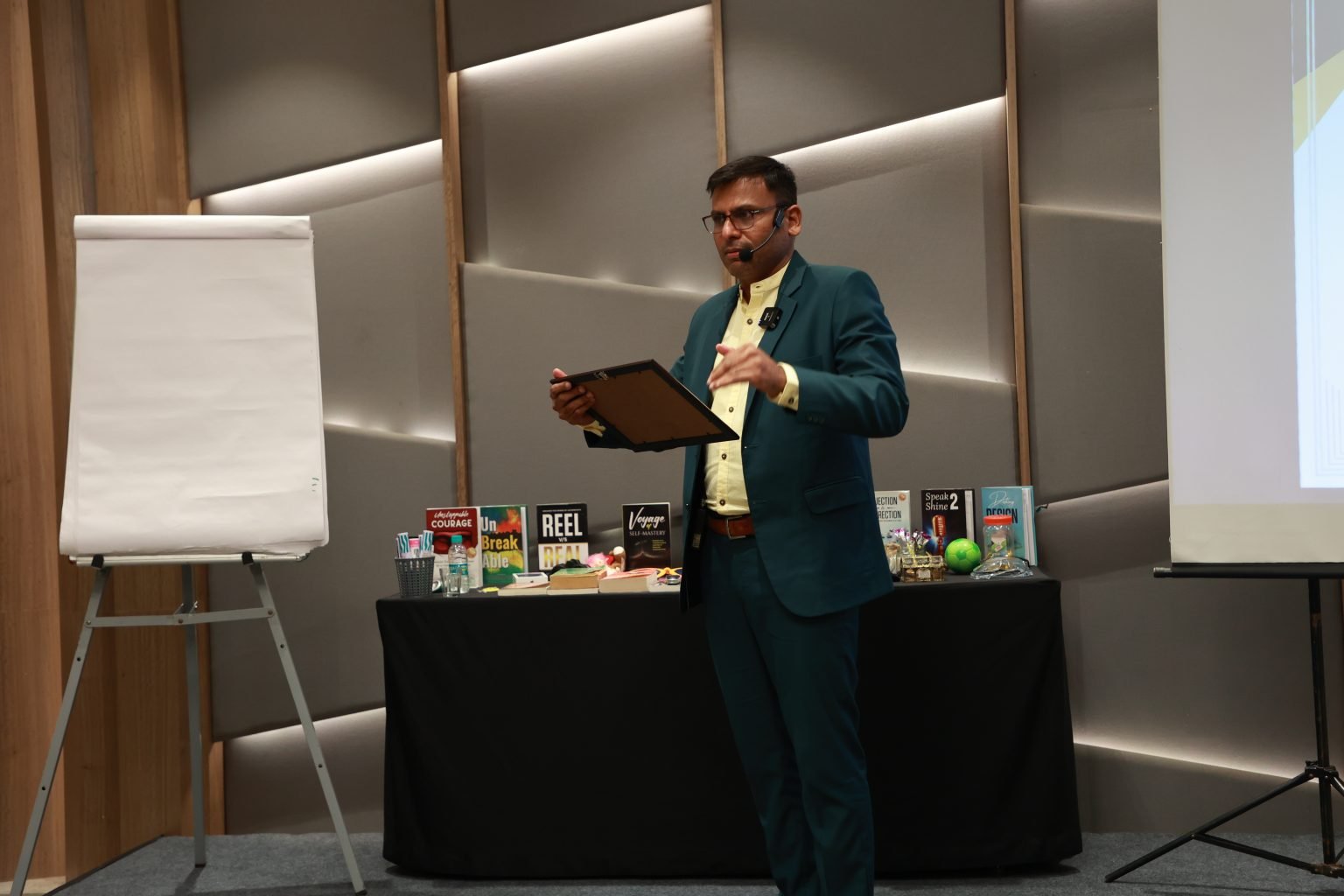
Imagine yourself walking onto the stage with your presentation ready, your heart pounding, yet you seem confident. You’ve rehearsed every line, every story, and even added a joke or two. Your words are clear, your message is solid, and yet… something feels off. You realize that your body language isn’t aligning with your words.
And your audience? Well, they become distracted, they start glancing at their phones, or even start talking among themselves.
So… what happened? I bet in that moment you’d be asking yourself, “But I said everything right… Didn’t I?”
Now here’s the twist: what you said wasn’t the problem. It’s how you said it.
Your body language was not leaving an impact…
Most public speakers underestimate the impact of body language; it’s the subtle yet powerful art that communicates intention, emotion, and confidence just through your movements. Studies show that over 55% of daily communication is non-verbal, making body language not just a bonus, but a necessity.
Your gestures, facial expressions, and posture often speak louder than your voice.
So now that you know what kind of power body language holds, let’s explore 5 body language hacks that will instantly amplify your message, help you build a stronger connection to your audience, and finally make your words feel as impactful as they are.
1. Learn to Make Use of the Stage
What you’re probably doing: Standing stiffly behind a podium, or pacing nervously.
What to do instead: Plant your feet onto the stage, keep your shoulders relaxed, and your chest open. When you move, do it with intent, walk during transitions, or when you’re expanding on a key point.
This creates a sense of control. You’re not just speaking to the room; you’re owning it.
When I first started public speaking, I’d just stand in the middle. The moment I stepped away and grounded myself, everything changed. The audience leaned in.
2. Use Gestures to Emphasize a Point
What you’re probably doing: Keeping your hands in your pockets or holding onto the mic with both hands.
What to do instead: Let your hands support your message. Use upward gestures when discussing growth, point to the audience when asking a question, or mimic shapes when describing objects. The brain processes gestures along with speech. Meaningful hand movements make your message more memorable.
This form of non-verbal communication underlines your words with energy.
3. Eyes Can Quickly establish a Connection
What you’re probably doing: Either avoiding eye contact altogether or staring down at one person for too long.
What to do instead: Break the room into sections. Spend a few seconds making eye contact with people across each part of the room. It should feel like a calm conversation, not a confrontation.
I used to stare over people’s heads, thinking it made me look more confident. Instead, it made me look disconnected. Once I began seeing people in the eye, people started paying more attention and being more present during my events.
4. Your Facial Expressions Can Lead a Conversation
What you’re probably doing: Keeping the same expression no matter what you’re saying, either blank or slightly nervous.
What to do instead: Match your facial expressions to the tone of your story. Smiling when sharing a win, be surprised when you’re talking about a turning point, when your audience feels your message through your expressions, it hits harder for them.
This subtle aspect of body language helps humanise your message.
5. Slowing Down Can Improve Your Body Language
What you’re probably doing: You’re rushing through your talk and are afraid of silent moments. You’re probably trying to avoid them at all costs.
What to do instead: Use pauses deliberately after a key point, before revealing a significant fact, or to let a story breathe. While silence isn’t “body language” in the classic sense, the stillness of your body during a pause can be highly expressive to the audience.
Once I learned to let my message land before rushing to the next line, I noticed something different: people started nodding. They were processing and digesting the information that I was giving them.
Conclusion
Words are essential, no doubt about that, but they’re only part of the picture. If you want your public speaking to truly influence, you need to speak with your body language, not just your words.
Every gesture, every glance, every step on stage either amplifies or dilutes your message.
The good news? You don’t need to be an actor or an extrovert. These are skills you can practice. Public speaking is not a talent; it’s a skill that can be developed, learned, and passed on.
Because when your words and your body language align, something amazing happens: You don’t just speak. You connect.
If you’d like me to write more about how body language affects your speech or cover any other topic, please let me know in the comments below.
And, If you want me to write more about how you can create more impact during your speeches, then let me know in the comment section below. Fill out this form to get a brand new guidebook about overcoming stage fear for free!